The British Seagull Model Range.
Click on a button to go to the different types of Seagull.

The novel engine number identifier has been restored, see button on the left. But if you have a problem you can still find out about your motor the old way, by using this page and the full engine numbers by following the links below...
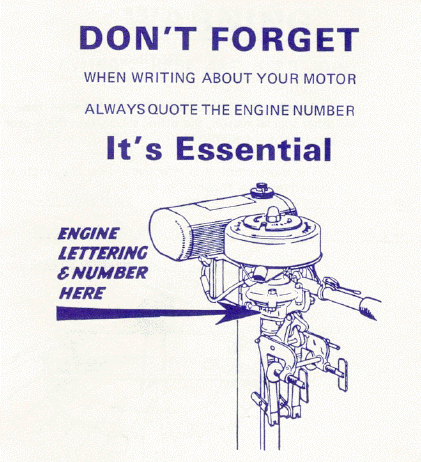
It is very important to quote the engine number when ordering spares or making enquires about your engine. To identify your motor, Click here to go to the Seagull Engine Numbers page and search the lists for your I.D. letters, these are the first set of letters in the sequence. i.e. 'AD' That will give you the type of British Seagull, (102 direct drive), the number in some early cases will give you a rough guide to the year. Note the numbers ran through several different models that were being built at the same time. After 1963 there was a letter and number at the end of the sequence to denote month and year A = January 3 = 1963. In 1973 the codes continued with double letters, i.e. AA 3= January 1973.
To add to the identification problems there are anomalies. For instance British Seagull used the letter 'R' to denote a motor had been reconditioned, but there is no indication when the reconditioning might have been completed. (Just to add to the confusion they used 'R' on some very late models with the ill fated roller bearings). The letter 'L' was used to denote 'longshaft'. In early years this was added to the end of the number code, later, from 1963 it was added to the prefix, i.e. FPL,= Forty Plus Longshaft. Watch out for the E for electronic ign, the G for Bing carb or the A for Amal, all prefixes!
Another problem is the inconsistency in the letter codes for the months. British Seagull did not use some letters as they could be confused or were in use elsewhere, so there are no letter I's, or O's and it should be that December equates to 'M', however the letter 'N' has been found, so perhaps they lost another letter at some point? I do believe they did not use the letter 'L'. Sadly when these pages were thrust into my hand, as I cleared the factory, there were no explanatory notes.
Thought you might like a few pics of a cutaway model I have. Produced by the Villiers apprentices about 1970.
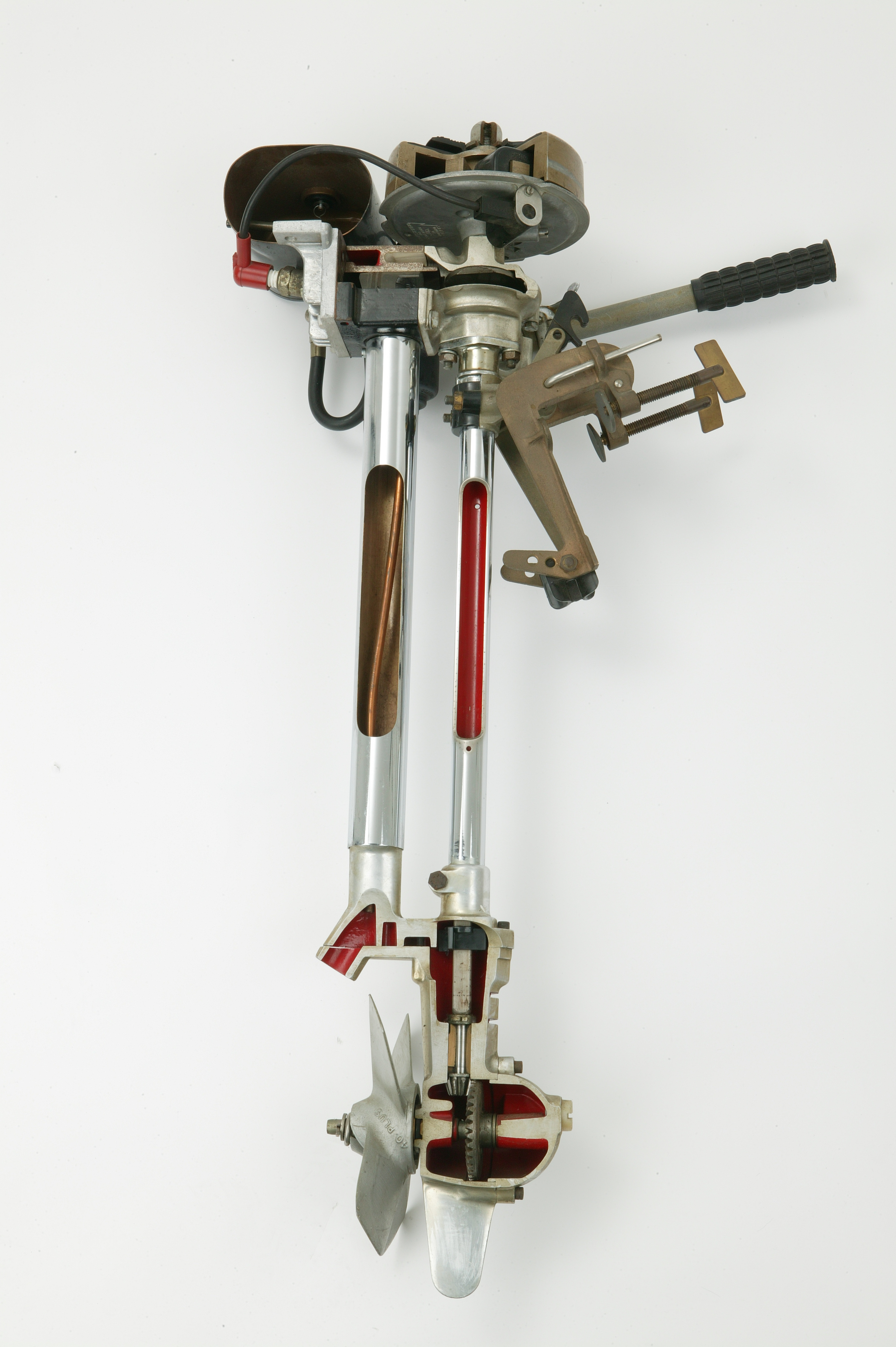

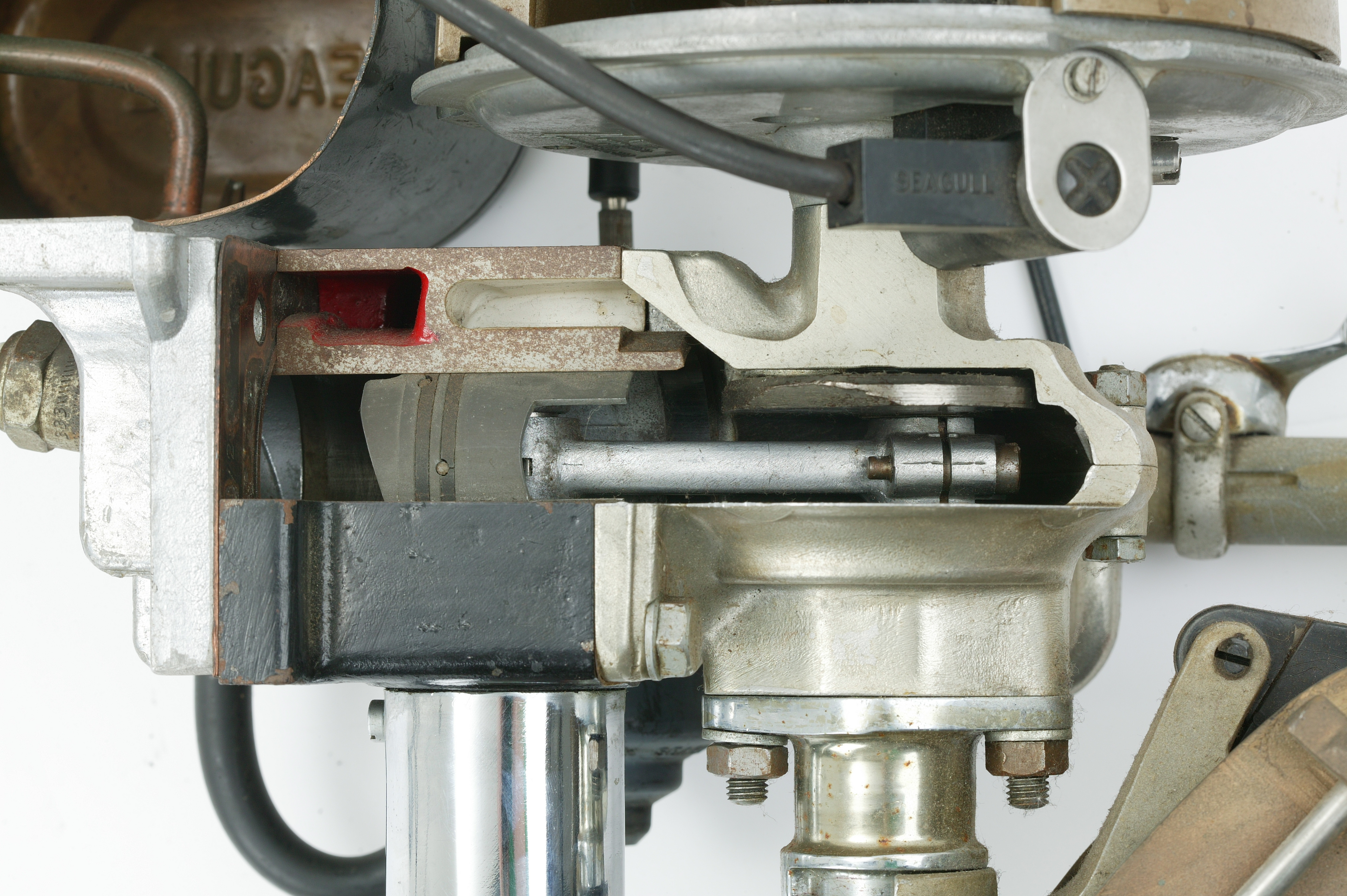
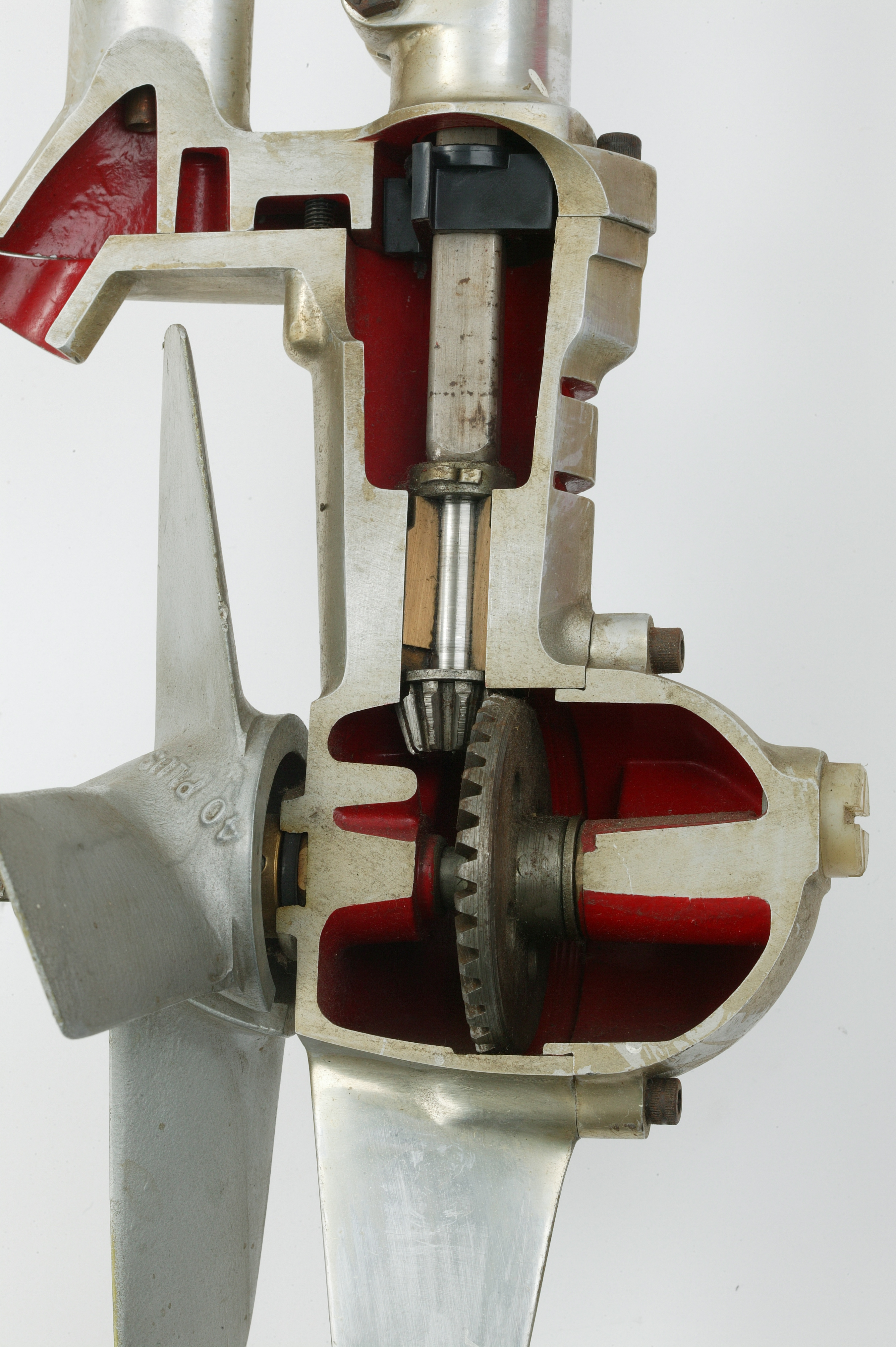
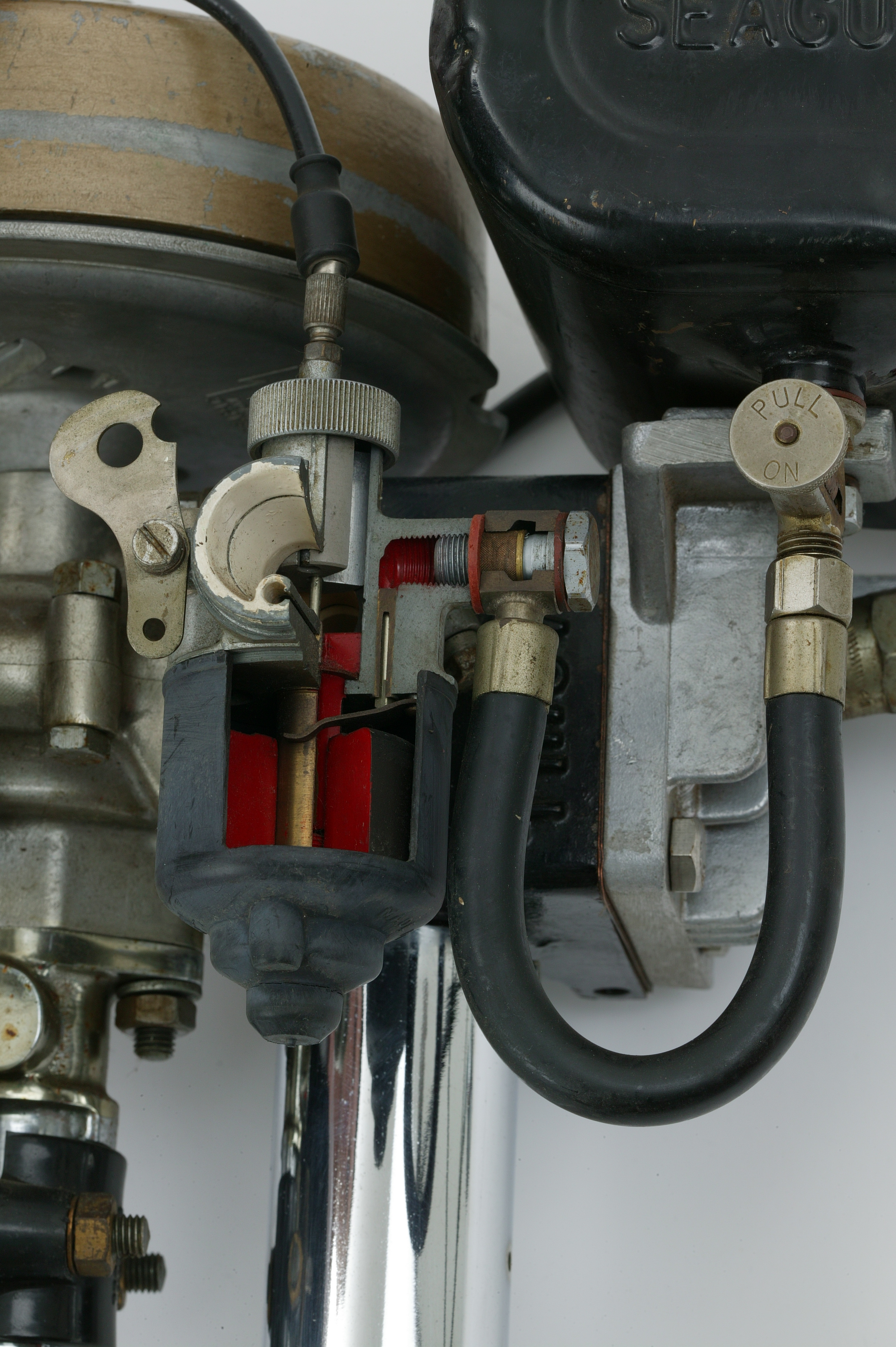
See if you can spot the error... Pete Whiting did, he was the first.... I had not noticed and i have still not stripped it to put it right!!
Pics by courtesy of Classic Boat Magazine.
To trace your engine number, click the here or the "Don't Forget" picture at the very bottom of this page for an explanation and a list of engine numbers by model.
Then use the buttons at the top of the page to see more details of your model.


Details from an old Seagull poster

Horse Powers
There has been a lot of myth and nonsense surrounding the power output of the British Seagull. There were, in the classic range, two power units, a 64cc and a 102cc (the original 102 cc motor of the 1930's existed alongside the later Century and Silver Century 102cc units.)
By fitting a variety of different gearboxes a range of power outputs were obtained. They classified them as follows.
Square block models.
Forty minus :- 1 to 1.5 hp, later as 1 to 2 hp, or later still, (before being called the 45), just 2hp.
Forty Plus (direct drive):- 1.5 to 2.5 hp, later as 2 to 3 hp
Forty Plus, Clutch Drive:- 3hp
The Century:- 4hp ( Villiers carb.)
Silver Century, :- 3 to 4.5hp (Amal carbed version of the Century.)
Century Plus, clutch drive 4.5hp.
Silver Century Plus, clutch drive, 4 to 5.5, later 5 hp.
When tested none of these motors gave the rated output, indeed they struggled to achieve more than 1, (yes ONE), horse power!
Other motors
Model 102, Direct or Clutch drive:- 3.5 to 4 hp
Model 102 Plus Clutch drive:-3.5 to 5 hp
Model 170:- hp not given as after 1980 Trades Descriptions Act! believed to be 7.5 hp!
Model 125:- again not given, but approx 5 hp.
QB curlew:- 4hp
QB Osprey:- 5hp
QB Kingfisher:- 6hp.
(There was one other, the ill fated twin cylinder motor of the 1930's, that gave 10hp!)
As you can see, there was only one 6hp model and only a couple of others, both ill fated, that gave more. It was the slow running props that gave the push, that made British Seagulls useful. They were designed to push heavy loads at displacement speeds, all day if needed.
The origins of the model Numbers.
Talking to one of the directors of the old British Seagull company at a London Boat show a few years ago, I learnt the real reason for the dropping of the traditional Featherweight, the Forty Plus, Century and Century Plus names.
It seems that the change was instigated when the Trades Descriptions Act was to become law in the UK. It was found that the vague hp ratings of the motors were a little awry. To comply with the new law it was thought that the thrust at the prop, (measured in pounds of 'bollard pull'), was more important, thus the Featherweight became the 45 and so on.
The Silver Century Plus they developed into the Model 110 by the inclusion of the reversing gearbox fitted to the 170, (thus escaping the duff con rod syndrome)! The 110 number was given to make it one model up from the 100, or Century. This model was numbered down to 90 when the thrust at the prop was measured. The Model 90 became the Classic 5 in the last days of Chillington, but sadly was dropped, one reason was the selling price, over £1000, but the final nail was the loss of the tooling for the gearbox cap, which is still unobtainable. (Fortunately a part that is rarely if ever needed as a spare, and I have some, if needed!)
Sadly, although the new numbers were correct, I and most others, still refer to our British Seagulls by their previous names. I think most of us prefer the old names.
Oddly in the last days of Chillington Marine they went back to hp numbers. The Kingfisher became the British Seagull6. The Osprey the British Seagull 5 etc. Thus it was the Featherweight that became the 45, ended its days as the Classic 2, the last engine type that was produced, to order only, up to 1996.
By then the codes were getting silly, TSEF prefix was one of the last, it included the information that it was fitted with a twistgrip!
John Williams
Click box below to seethe model identification numbers.
Sorry if there is a slight delay in me getting back to you, I am having so many mails sent in these days...
If I am not answering the phone, this might give you a clue to where I might be if it's good sailing weather!

UK queries may be better by phone, as I can ask you those extra little questions that might solve a problem easier. (Like why your 102 has a century plus gearbox!)